Learn

Ransomware

Ransomware remains one of the most destructive threats facing organizations today. Understand how attacks unfold, and how ByteJams Ranger stops them instantly.

What is Ransomware?

Ransomware is malicious software that encrypts a victim's files and demands payment in exchange for the decryption key. Modern ransomware attacks are rarely opportunistic; they are highly coordinated, human-operated campaigns that can paralyze entire organizations within hours.

Since 2019, most ransomware groups have adopted double extortion: they steal files before encrypting them. If the ransom is not paid, the stolen data is published on leak sites, making backup-only defenses insufficient.

A persistent blind spot exists even for leading security vendors: remote ransomware. An attacker operating from a single compromised or unmanaged machine can encrypt files on shared network drives without ever touching the protected endpoints. According to Microsoft, over 90% of ransomware attacks today originate from unmanaged or compromised devices.
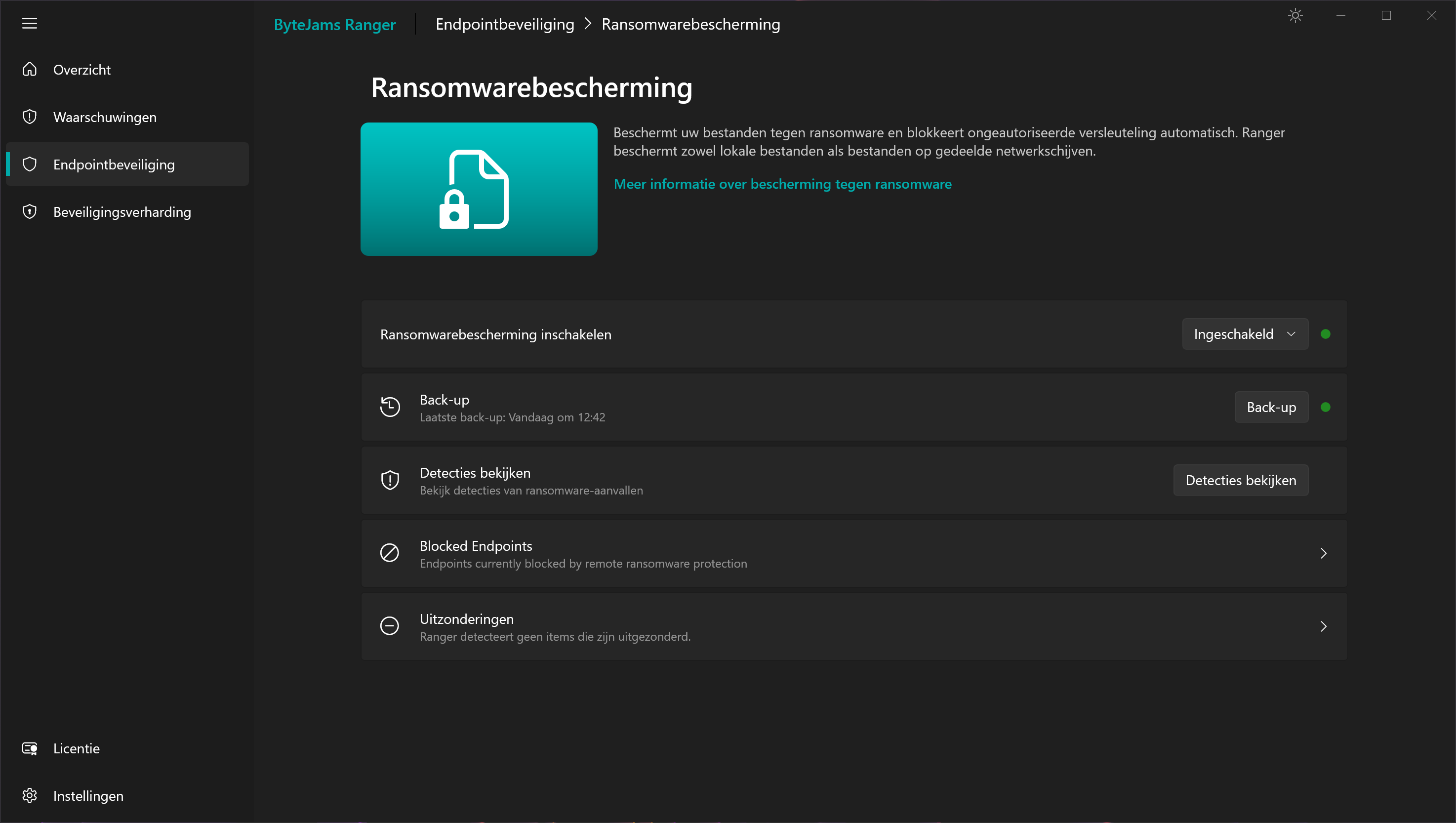
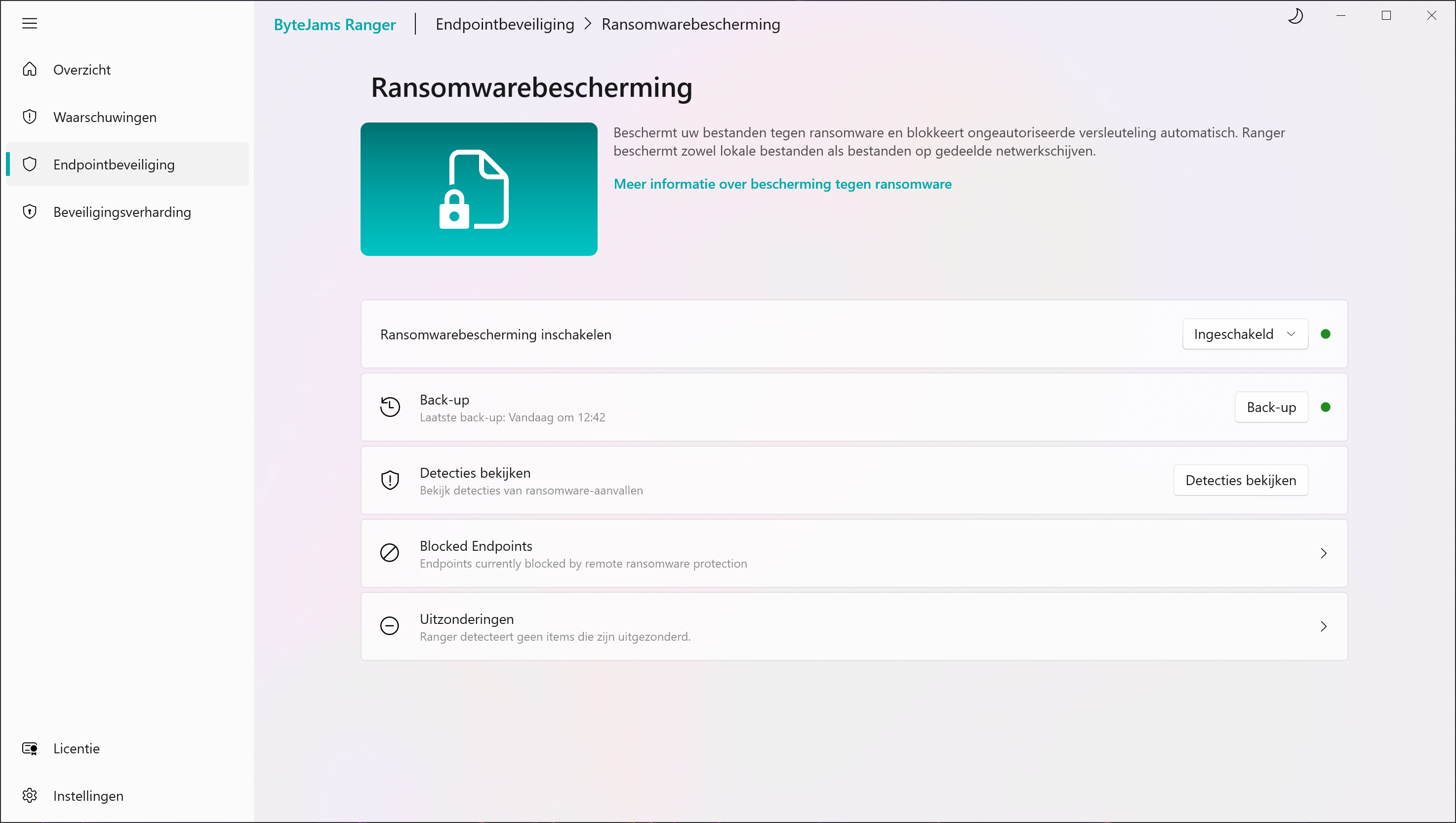
Ranger ransomware protection in dark mode Ranger ransomware protection in light mode

How a Ransomware Attack Unfolds

Step 01

Initial Access

The attacker gains a foothold through phishing emails, exposed RDP services, or purchased stolen credentials from infostealer logs. VPN vulnerabilities and unpatched internet-facing systems are also common entry points.

Step 02

Reconnaissance & Lateral Movement

Once inside, the attacker maps the network, identifies high-value targets, and moves laterally to domain controllers and file servers to maximize the impact of the eventual encryption.

Step 03

Data Exfiltration (Double Extortion)

Files are stolen before encryption begins. This gives the attacker a second point of leverage: even if victims restore from backups, the threat of publishing sensitive data remains.

Step 04

Ransomware Deployment

The ransomware payload is deployed across the network, encrypting local files, network shares, and remote machines simultaneously. Attacks can complete in minutes, outpacing manual incident response.

Step 05

Ransom Demand

A ransom note is left on every encrypted machine. Victims are pressured to pay, often in cryptocurrency, within a tight deadline or face permanent data loss and public data exposure.

How Ranger Stops Ransomware

  • Stop file encryption attacks instantly and automatically.
  • Deploy once and protect forever: no ongoing configuration needed.
  • Autonomous on‑device detection using a single, signature‑less algorithm; no cloud, sandbox, or decoys needed.
  • Automatic file recovery ensures no data loss; encrypted files are instantly restored.
  • Flexible deployment with choice of user‑mode or kernel‑mode protection based on your resiliency requirements.
  • Protects against both local and remote ransomware, including attacks originating from unmanaged or under-protected outdated machines.

Ranger's patented algorithm detects ransomware generically, without signatures, cloud dependency, or internet connectivity. It is the only solution that addresses the root cause of remote ransomware attacks, protecting shared network resources even when the attacking machine is outside Ranger's reach.

Unlike AI‑driven platforms that can be bypassed by shaping malicious code to look statistically benign, Ranger operates on behavioral fundamentals that cannot be evaded by obfuscation.

Request a demo →